
The lean construction simulation that teaches Last Planner® in one day
Your project team builds a small villa twice: first the usual way, then with the Last Planner® System. Everyone sees what changes in time, waste and productivity, and they remember it on site.
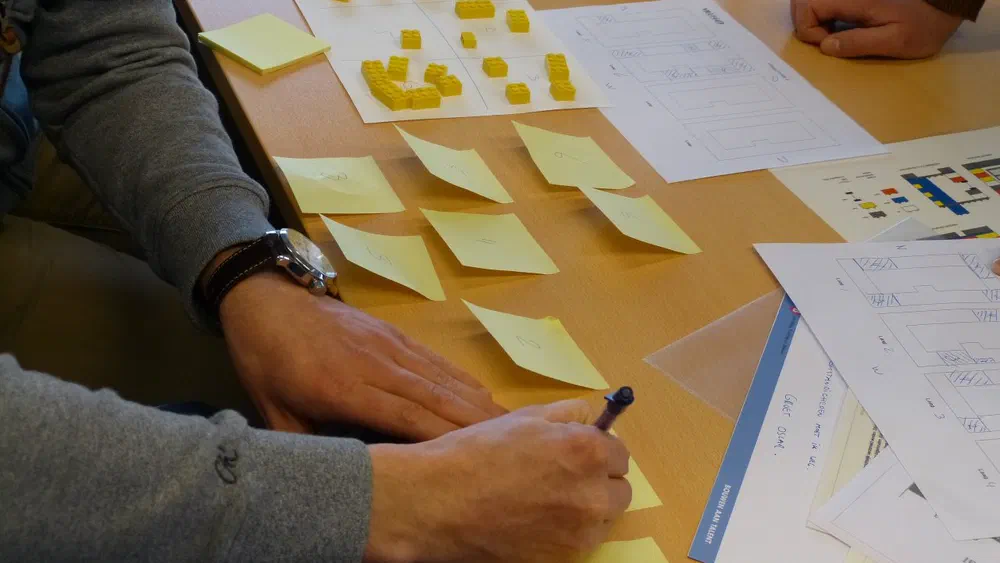
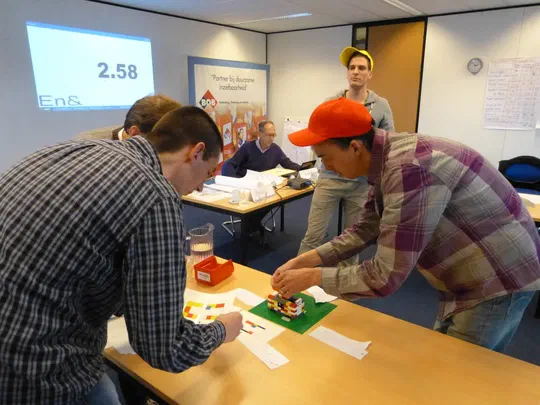
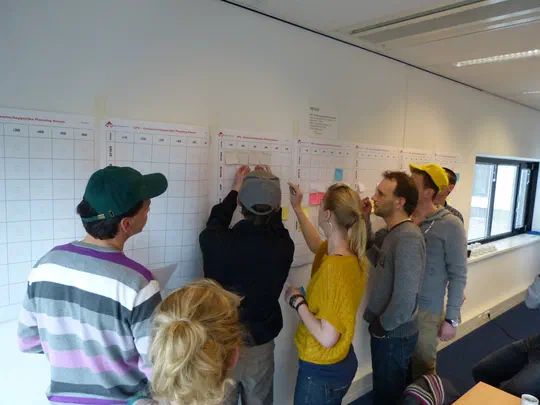
New people on every project, and one day to get them planning together
Every project brings a new mix of trade foremen, engineers, owners and designers. Most of them have heard of the Last Planner System. Far fewer have felt how it changes a week on site, and slides don't close that gap.
A shared experience that everyone can point back to
Villego gives all key players the same reference point: a villa they built twice, with numbers to prove what changed. When the real pull planning session starts, people say "remember the villa" instead of arguing about theory.
What is a lean construction simulation?
A lean construction simulation is a small project that a team plans and builds in a training room, so people can try lean methods without putting a real schedule at risk. Nobody's job is on the line. Villego® is a simulation of this kind. It's built around the Last Planner® System, the production planning system that Glenn Ballard described in his doctoral thesis at the University of Birmingham (Ballard, 2000).
Why build a toy villa when you could explain pull planning on a slide? Because people learn a planning system by using it. A lecture can't do that. Most superintendents have sat through a talk on percent plan complete. Far fewer have watched their own team finish the same job in less than half the time once they changed how they plan and make promises.
Here's how it works. In round one the project runs the usual way, with a design, a schedule, a budget, a main contractor and five to ten subcontractors, while observers collect data. After a step-by-step introduction to the Last Planner System, the same people pull plan backward from the milestone, commit to each other and build the villa again.
Why the second round convinces people
The numbers are theirs. They come from the participants' own work, so they don't feel like a sales pitch. Nobody can say "that wouldn't happen on our jobs" when it just happened at their table. And the misses that are still left in round two give the facilitator real material for a short root cause discussion. Read the full simulation guide to see the roles, timings and data.
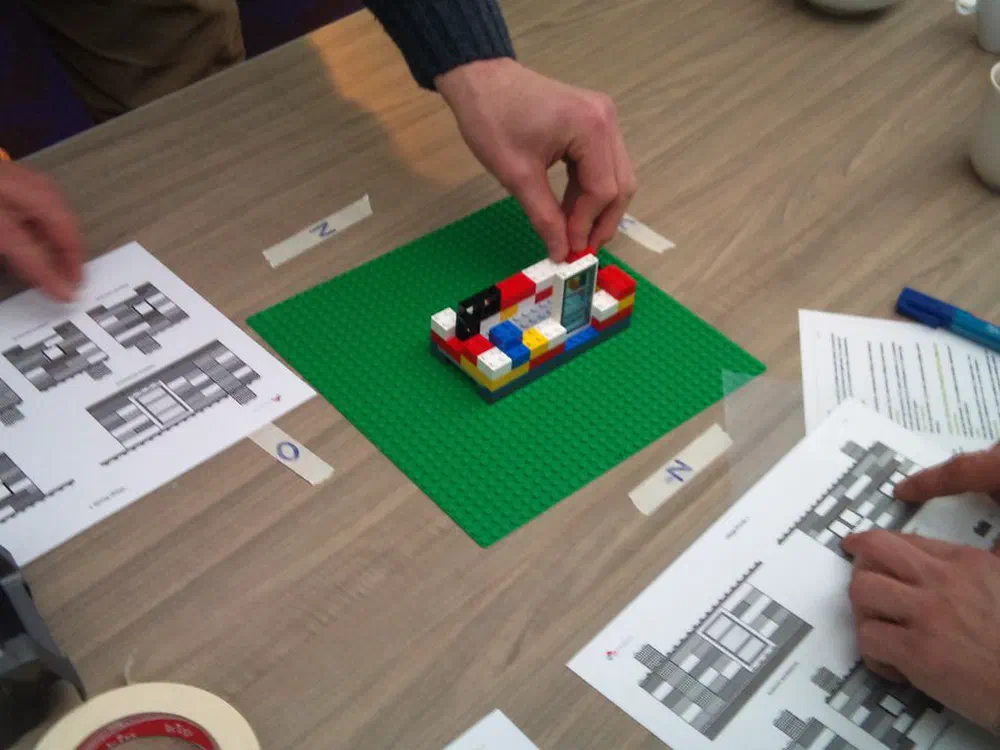
Four steps from push to pull
A basic workshop takes about four to five hours. Round two on its own (2 to 2.5 hours) works as a refresher, a team-building session or a contest between teams.
Build it the usual way
A main contractor, five to ten subcontractors and observers follow a design, a schedule and a budget. Work is pushed, and the observers log time, waste, safety and productivity.
Learn the Last Planner System
The facilitator introduces pull planning, look-ahead planning, constraint analysis, weekly work planning and percent plan complete, step by step.
Plan and build the lean way
The same team pull plans with six colors of sticky notes, makes promises in planning conversations and builds the villa again.
Compare the key figures
Round one and round two data go side by side. The team finds root causes and agrees what they'll carry into the real project.

What changed between round one and round two
Warcup and Reeve (2014) ran Villego with construction managers from a commercial contractor in Salt Lake City and published the scores. One team of professionals:
Source: Robert Warcup and Edward Reeve (2014), Using the Villego simulation to teach the Last Planner System, Lean Construction Journal, pp. 1 to 15. These are classroom scores from one team, not project results; the paper also reports metrics that did not improve for every team.
Who the simulation is for
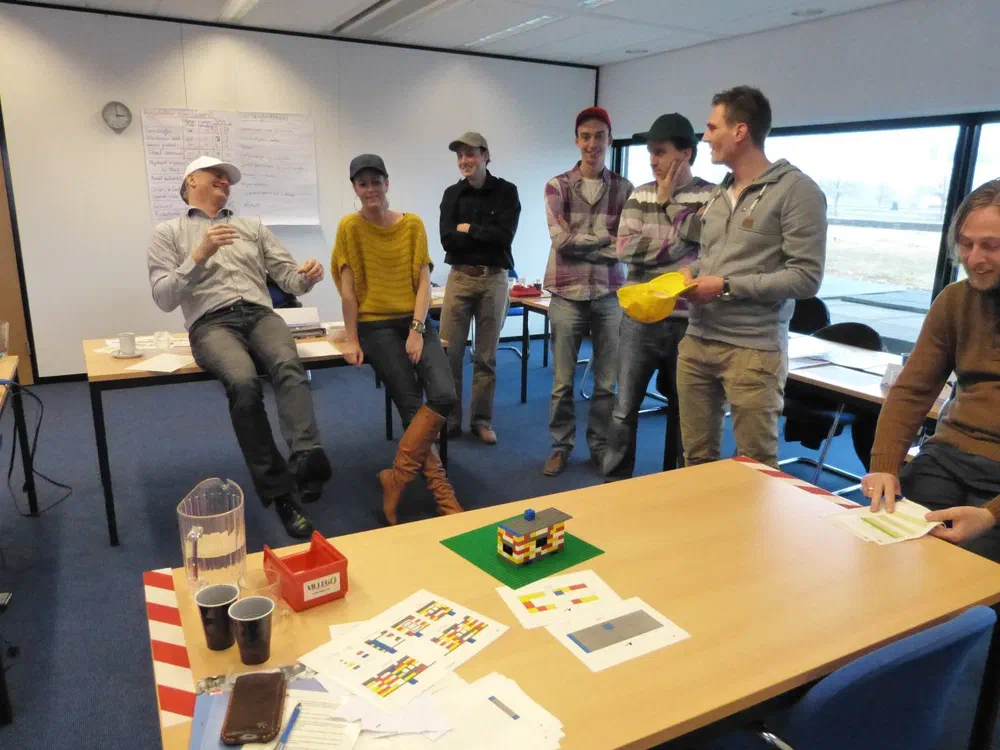
Run it with your own employees, your subcontractors' staff, other project participants, and your customers and clients. In one session they:
- see the difference in key figures between the usual way and the Last Planner way
- practice the planning conversations and learn what the system asks of collaboration and skills
- experience the gains in production and predictability for themselves
- start working as a project team before the project starts
- understand how each participant, the project and the customer benefit
What facilitators and superintendents say
I have been teaching and implementing the Last Planner System on projects for over 10 years. In my opinion, the Villego simulation does the best job of clearly demonstrating the value of collaborative planning and project execution using the principles of the Last Planner System. I now use this simulation in my lean construction/LPS boot camps to 'get the attention' of the group as to what is possible by putting a project on the LPS.
I personally like the Villego simulation used as a part of John Draper's/Lean Project Consultant's boot camp format because Villego helps general foreman quickly understand the Last Planner System (LPS) and gets them all engaged in using the full Last Planner System on our project. I think everyone understands the concepts for production planning sooner and begin using new behaviors and processes sooner than when we start up the Last Planner System without running the Villego simulation.
People liked the Villego simulation a lot. They were enthusiastic about Villego as a hands-on learning tool for learning the practice of lean construction and pull planning. Thank you for developing this remarkable simulation. I find it far more useful than any other simulation of pull planning.
Thanks again, I ran the simulation and I have never seen adults having so much fun!
Everything you need for 7 to 15 participants
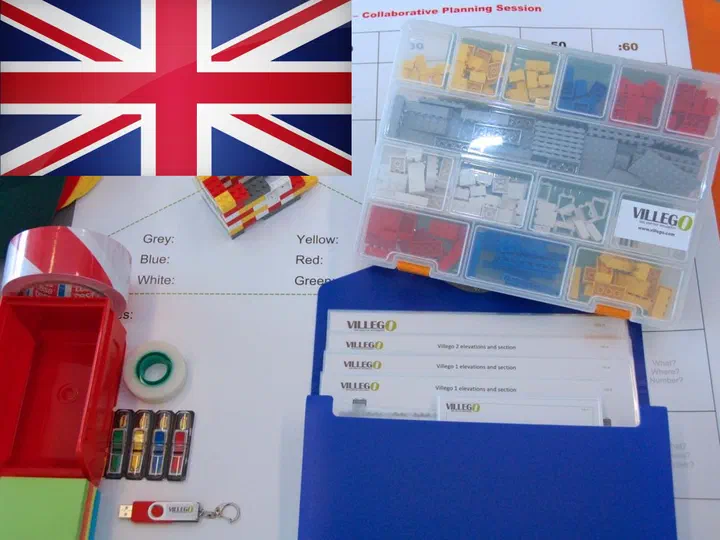
One kit holds the bricks and materials for the villa, laminated role instructions, six colors of sticky notes, safety caps and site marking, a waste skip, a step-by-step manual and a USB stick with printable consumables, a timer and the scoring spreadsheet.
- English
- French
- German
- Spanish
- Brazilian Portuguese
- Japanese
- Dutch
- Hungarian
- Russian
Learn each part of the system
Practical guides to the conversations and tools your team practices in round two, written for superintendents, project engineers and trade foremen.
Last Planner System: A Practical Construction Guide
A practical guide to the conversations that connect project milestones, ready work, reliable crew commitments and …
Read the guide →Pull planning: negotiate handoffs that crews can keep
Plan backward from a milestone by negotiating what each trade needs to start. A worked example shows how to test …
Read the guide →Look ahead schedule: make work ready before crews arrive
A look ahead schedule turns upcoming tasks into ready work. Learn how to choose the window, remove constraints and build …
Read the guide →Constraint analysis: make construction work ready
Identify what must be true before crews start. Use a constraint log to assign removal actions, verify readiness, and …
Read the guide →Weekly work plan: commitments your crews can keep
Write crew commitments that match ready work and available capacity. Use a practical meeting agenda, a construction …
Read the guide →Percent plan complete: learn from missed promises
PPC measures how reliably your team keeps planned commitments. Learn the counting rules, read trends, and use missed …
Read the guide →Lean construction principles: what changes on site Monday
Turn lean principles into site decisions: agree on value, improve handoffs, control work release and learn from missed …
Read the guide →How to design a lean workshop for construction teams
One-, two- and three-day agendas, who to invite, room setup, facilitation and the follow-up that makes a lean workshop …
Read the guide →Latest from the lean construction blog
Construction superintendent training for reliable field planning
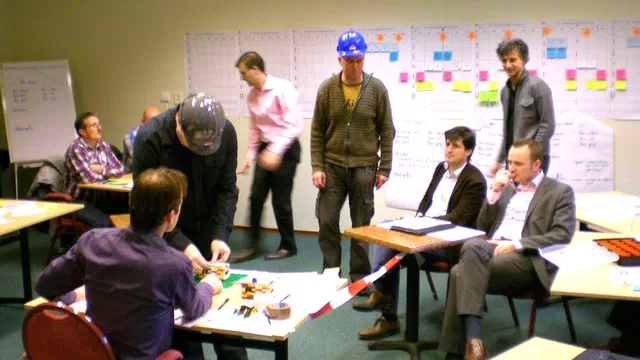
Build planning and facilitation skills through a 90-day training plan, coached foreman practice, and honest measures of promise reliability.
Read the post →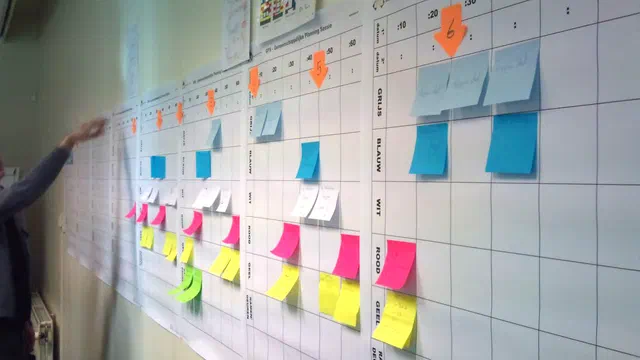
Location based scheduling and LPS: what each sees
A worked apartment-building example shows how flowlines reveal crew movement and how Last Planner turns that information into workable commitments.
Read the post →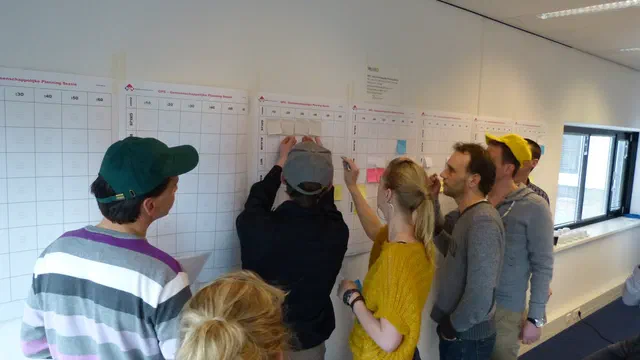
How to run a pull planning session as the facilitator
A facilitator’s guide to invitations, pre-work, room setup, a 150-minute agenda, difficult conversations, and the records your team needs afterward.
Read the post →A pull planning workshop on video
This recording from San Diego Mesa College shows a pull planning workshop from January 2013. It gives you a feel for the noise and energy at the planning wall when a group first plans backward from a milestone.
Want to see the numbers behind a session? The Warcup and Reeve (2014) paper reports every round of their Villego workshops.
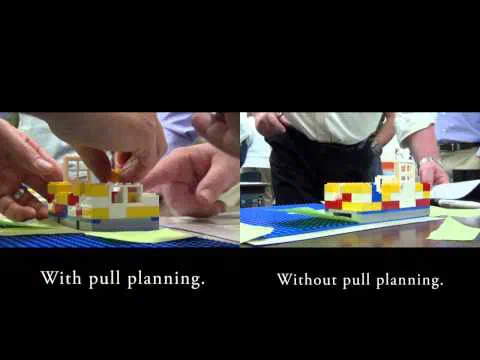
Pull Planning Workshop, San Diego Mesa College, January 18, 2013. Video by SDCCD Propositions S and N on YouTube; it loads from youtube-nocookie.com only after you press play.
Teach the Last Planner® System in one day
One Villego kit runs a workshop for 7 to 15 participants. Ask us about kits, languages and delivery.