
You can finish a lean construction book and still struggle to get a useful promise from a foreman. Monday's plan says “finish rough-in,” but nobody agrees which rooms are ready or what the next trade needs. More reading won't fix that unless you connect it to work.
For people learning or facilitating the Last Planner® System (LPS), I'd start with a practical construction paper, follow it with the original research, and then read the broader lean foundations. Here's the order, what to try on site, and what you can leave until later.
Reading needs a shared experience of planning
Say a general contractor in Columbus, Ohio, is building a four-story medical office with 14 trade partners. This hypothetical team uses “pull” to mean several different things. One superintendent means working backward from a milestone; a supplier means delivering only when needed. They aren't discussing the same decision.
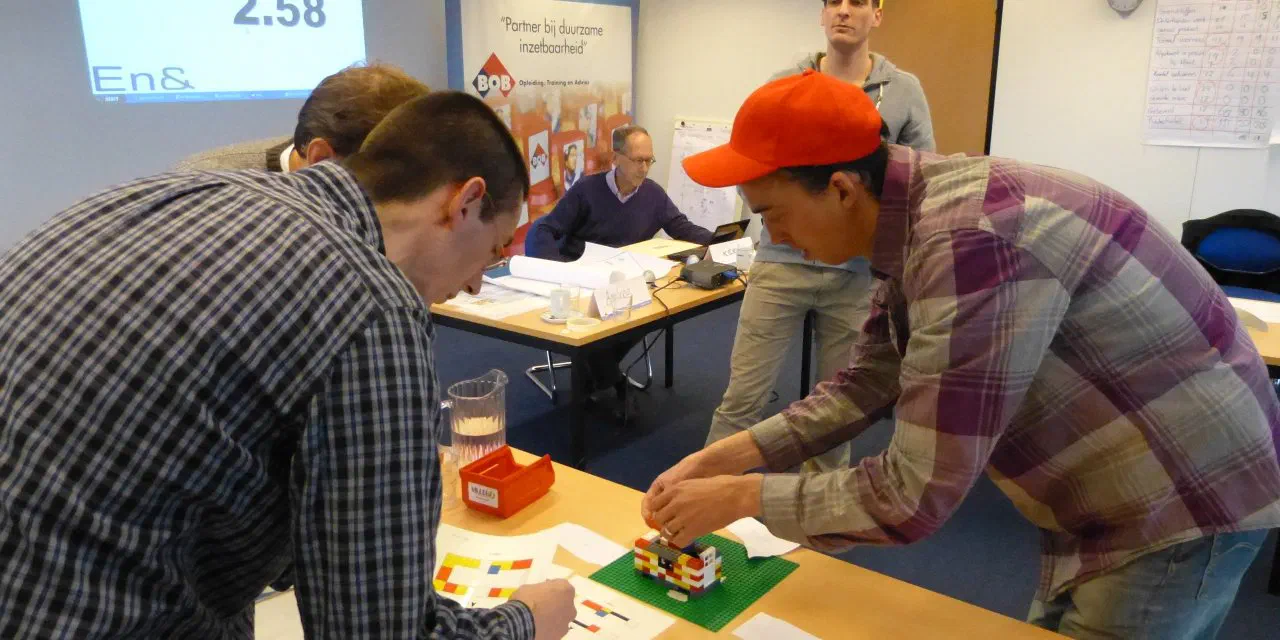
A shared exercise gives those words context. Villego® is a Last Planner System simulation in which a project team builds a small house, or “villa,” from small bricks in two rounds: first the usual push way, then the Last Planner way. Observers record construction time, waste, safety, productivity and PPC, or Percent Plan Complete, the share of promised tasks completed.
You can pair reading with that comparison. Which action made the next team's work possible? Which promise wasn't ready to be made? You'll have specific questions to bring back to the text, rather than treating lean as a vocabulary test.
Which lean construction book or paper should you read first?
A new facilitator doesn't need the longest bibliography. If your first planning meeting is next week, a manufacturing history can wait. The following sequence puts construction conversations before company-wide transformation.
| Order | Read | Why here? |
|---|---|---|
| First | Alan Mossman (2020), Last Planner: 5 + 1 crucial & collaborative conversations for predictable project production planning, available through the Last Planner System guide | Understand the conversations you'll facilitate. |
| Second | Herman Glenn Ballard (2000), The Last Planner System of Production Control, PhD thesis | Understand assignment quality and production control. |
| Third | James P. Womack and Daniel T. Jones (1996), Lean Thinking: Banish Waste and Create Wealth in Your Corporation | Put planning within a wider view of customer value and flow. |
These are different kinds of reading. Mossman's guide helps you prepare a conversation. Ballard explains its operating logic. Womack and Jones help you question management habits that can defeat it.
First: Mossman turns the system into conversations
Your hypothetical Columbus team has a wall covered in sticky notes, yet drawings still arrive late. The phase plan looks convincing. Work isn't becoming ready.
Mossman (2020) describes phase planning, look-ahead planning, commitment planning, production management and learning, with first-run studies as an extra opportunity to rehearse work. That structure teaches a site team why a pull-planning event alone doesn't constitute the whole system.
The look-ahead and commitment-planning sections make useful starting points after “Last Planner in practice,” especially when crews confuse scheduled work with ready work. Make-ready means removing obstacles before a crew promises to perform the work. A handoff means transferring completed work that the following trade can actually use.
For practice, choose one upcoming ceiling zone. Ask the mechanical and drywall foremen to agree what “ready for closure” means, including inspections and access. Then identify who's responsible for clearing each obstacle. The conversation exposes assumptions before they become missed promises.
Foremen should read those practical sections first. Experienced facilitators who already understand them can skip the introductory benefits discussion and study first-run studies instead. You don't need to assign the whole paper to everyone.
Second: Ballard explains why promises need quality checks
Suppose that same team's weekly plan contains 20 commitments and 16 finish as promised. Its PPC is 16 ÷ 20 × 100 = 80%. That's a hypothetical calculation, not a research result. But the number doesn't tell you whether the four misses came from missing information or unrealistic task sizes.
Ballard (2000) investigates production control directly. His University of Birmingham thesis, The Last Planner System of Production Control, examines how to improve planning reliability. Chapter 3 explains assignment quality through definition, soundness, sequence and size, alongside learning from noncompletion. It also explains a workable backlog: ready, lower-priority work available when planned work can't proceed or finishes early.
The practical reading is Chapter 3. Take “finish rough-in” from your weekly work plan and rewrite it with a location, an observable completion condition and a deadline. Then check readiness and crew capacity with the person making the promise. You aren't improving the sentence alone; you're testing whether the assignment is achievable under the conditions that crew will face during the plan period.
Read the case studies if you're designing implementation or coaching several trades. For a foreman, the research-method chapter can wait. Facilitators shouldn't skip the assignment-quality logic, because a confident promise can still be a poor assignment.
Third: Lean Thinking challenges local efficiency
Your electrical crew finishes several rooms early, but the inspection process can't release them. The crew's output looks good. The project's usable work hasn't advanced at the same rate.
Womack and Jones (1996) organize Lean Thinking around value, the value stream, flow, pull and perfection. A value stream follows delivery from start to finish. Flow concerns how work moves through that sequence, including the delays between operations.
Read Part I before the company case histories. Then follow one room from rough-in through inspection and closure. Where does it wait? Which early release creates work that the following trade can't yet use? Use those questions during a walk through an unfinished room, because the book's factory examples need interpretation before you apply them to a temporary construction production system.
Project managers and lean coordinators should read this after they understand LPS. Foremen who already grasp flow can skip the long transformation stories. It won't supply a meeting agenda.
Other lean construction books and papers: choose by the problem
If your Columbus team understands the planning routine but keeps repeating a failure, another general introduction won't help much. Choose the next reading around the decision you're struggling with. These recommendations are applications of the ideas, not claims that the authors prescribed these site exercises.
Liker (2004): leadership that supports learning
A superintendent asks for honest reasons for missed promises, then criticizes anyone who reports one. The team won't keep raising problems under those conditions.
Jeffrey K. Liker's The Toyota Way: 14 Management Principles from the World's Greatest Manufacturer teaches managers to support improvement through their own behavior. Use Principle 12, going to see the situation firsthand, and Principle 14, reflection and continuous improvement. Walk a delayed work area with the foreman before deciding what caused the miss.
This is a useful leadership reading. Skip it for now if you only need to learn the mechanics of an LPS meeting; it isn't an LPS manual.
Ohno (1988): recognize overproduction before praising it
A crew prefabricates material to stay busy, but the installation sequence changes and the material needs rework. More output wasn't useful output.
Taiichi Ohno's Toyota Production System: Beyond Large-Scale Production, in its 1988 English edition, explains waste and the logic of just-in-time production. Apply the overproduction idea: compare material released with material the next operation can safely accept.
You'll get more from Ohno after observing work flow yourself. Beginners can skip this historical account initially. Don't translate just-in-time into removing every site buffer; delivery uncertainty and safety still need deliberate provision.
Goldratt and Cox (1984): improve the limiting operation
Say drywall can prepare rooms faster than the inspection process releases them. Adding drywall capacity may increase waiting work without increasing completed handoffs.
Eliyahu M. Goldratt and Jeff Cox's The Goal: A Process of Ongoing Improvement teaches bottleneck thinking through a factory-based novel. Use the idea of protecting the operation that limits total output: have rooms genuinely ready before the agreed inspection window.
The story is approachable for a team book club. Skip it if bottleneck thinking is already familiar. And don't confuse its system-level bottleneck with every obstacle in a construction constraint log, or treat it as a substitute for make-ready planning.
Koskela (1992 and 2000): explain what construction management misses
A cost report records installation hours while rooms wait for information. It can miss the effect of those gaps on total delivery.
Lauri Koskela's (1992) Application of the New Production Philosophy to Construction, CIFE Technical Report 72, challenges the traditional construction model. Use its distinction between processing and the surrounding flow to include waiting in your review, rather than measuring installation alone.
His 2000 production-theory dissertation develops transformation, flow and value generation as complementary views. Transformation is making the physical product; value concerns satisfying customer requirements. Test all of them when reviewing a room: was it installed correctly, did it progress reliably, and does it meet the intended use?
Facilitators who need the theoretical argument should read these. Busy foremen can skip both initially; neither is a quick meeting handbook.
Forbes and Ahmed (2010): connect site tools with project delivery
A site team improves its daily huddle, but procurement decisions continue to disrupt upcoming work. Meeting skills alone won't resolve that mismatch.
Lincoln H. Forbes and Syed M. Ahmed's Modern Construction: Lean Project Delivery and Integrated Practices provides a broader construction reference. Start with Chapter 6, “Lean Construction Applications,” then Chapter 7, “Lean-Based Project Delivery Methods.” Use them to discuss which decisions sit with the site team and which require support from project leadership.
Choose this when you need construction-specific breadth beyond LPS. Skip a cover-to-cover reading if you're preparing one foreman meeting; select the chapter that addresses your problem.
A reading sequence should change the next promise
A book-club discussion can finish without changing a single assignment. That's the test worth making after your Columbus team reads: can they produce a better promise together?
For facilitators, Warcup and Reeve (2014), Using the Villego® Simulation to Teach the Last Planner® System, is a useful teaching paper. Their qualitative study involved 31 participants and identifies learning obstacles, including difficulty planning backward. The discussion of coaching is useful when you're deciding how much help to offer without completing the team's plan yourself. Field-form users can skip this teaching paper initially.
The authors also report that further study and practice are needed for real-project implementation. A successful exercise doesn't certify competence.
Your team can test each reading like this:
- Select one upcoming handoff and write what completion means to the receiving trade.
- Review readiness using constraint analysis, with an owner for each unresolved obstacle.
- Compare the promise with the result and examine reasons for variance, meaning why actual completion differed from the commitment.
If your next weekly plan still says “finish rough-in,” pause the reading list. Return to assignment definition with the foreman. The next book can wait until the first idea is visible in how your team plans.
Sources
- Alan Mossman (2020). Last Planner: 5 + 1 crucial & collaborative conversations for predictable project production planning.
- Herman Glenn Ballard (2000). The Last Planner System of Production Control.
- James P. Womack and Daniel T. Jones (1996). Lean Thinking: Banish Waste and Create Wealth in Your Corporation.
- Jeffrey K. Liker (2004). The Toyota Way: 14 Management Principles from the World's Greatest Manufacturer.
- Taiichi Ohno (1988). Toyota Production System: Beyond Large-Scale Production.
- Eliyahu M. Goldratt and Jeff Cox (1984). The Goal: A Process of Ongoing Improvement.
- Lauri Koskela (1992). Application of the New Production Philosophy to Construction.
- Lauri Koskela (2000). An Exploration towards a Production Theory and its Application to Construction.
- Lincoln H. Forbes and Syed M. Ahmed (2010). Modern Construction: Lean Project Delivery and Integrated Practices.
- Robert Warcup and Edward Reeve (2014). Using the Villego® Simulation to Teach the Last Planner® System.